
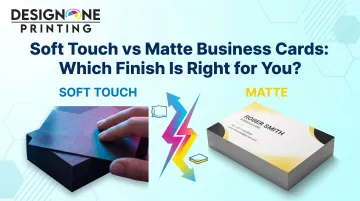
Both soft touch and matte business cards skip the shine and deliver a professional, non-glossy look. But they create very different impressions. One stops people mid-conversation. The other says "I'm exactly who I appear to be" without any theater.
According to research from UPrinting, 72% of people judge a company's quality based on the quality of their business card — and 39% would avoid doing business with a company whose card feels cheap. The finish you choose carries weight.
This guide breaks down exactly how soft touch and matte differ, which industries and design styles favor each, and how to make the right call for your brand.
Key Takeaways
- Soft touch uses a velvety, suede-like coating that makes people stop and notice; matte is flat, smooth, and no-fuss
- Soft touch suits premium, luxury, and impression-driven brands; matte works best for corporate, B2B, or high-volume use
- Matte accepts nearly any pen type; soft touch works with ballpoint but gel pens may smudge
- Per-unit cost is higher on soft touch; matte is the practical pick when ordering in bulk
- Pick based on your brand's tone and how often you hand-write on cards — either finish can work, but they serve different goals
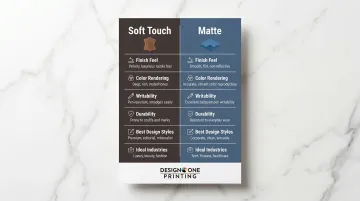
Soft Touch vs. Matte Business Cards: Quick Comparison
| Feature | Soft Touch | Matte |
|---|---|---|
| Finish Feel | Velvety, suede-like, peach-skin texture | Flat, smooth, no added texture |
| Appearance | Slightly muted, warm color rendering | Clean, accurate CMYK reproduction |
| Writability | Ballpoint pen only; gel pens smudge | Accepts ballpoint, felt-tip, fine-liner |
| Durability | Fingerprint-resistant; may show rub marks over time | Holds up well; edges can wear with heavy handling |
| Best Design Styles | Dark palettes, moody photography, minimalist with contrast | All design styles; clean typography, geometric layouts |
| Ideal Industries | Luxury, real estate, photography, beauty, hospitality | Corporate, legal, consulting, B2B, tech |
| Price Point | Slightly higher per unit | More cost-effective at volume |
One Technical Detail Most Buyers Miss
Both finishes, when produced properly, use heat-applied BOPP film laminates rather than varnish or aqueous coating. Film laminate bonds directly to the printed stock using heat and pressure, creating a uniform layer that resists water, scuffing, and edge damage. Varnish is a liquid coating that can wear unevenly and crack with handling.
When comparing quotes from multiple vendors, ask specifically whether they use film laminate.
Watch Out for Naming Confusion
Different printers call these finishes different things:
- Soft touch may also appear as "suede," "velvet laminate," or "silk matte" — Design One Printing, for example, uses both "suede" and "soft-touch" as descriptors for this finish
- Matte may appear as "flat matte" or "matte laminate"
- Silk laminate is technically distinct — it's a smoother, satin-like film that sits between standard matte and soft touch in texture
When comparing vendor quotes, ask for a physical sample rather than relying on finish names alone.
What Are Soft Touch Business Cards?
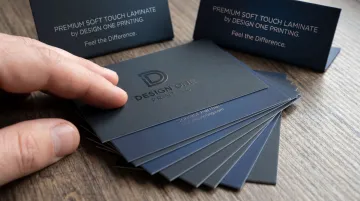
Soft touch is a heat-applied BOPP film laminate bonded to the card surface after printing. The result is a velvety, peach-skin-like texture (often compared to suede) you feel the moment a card is in your hand. No other flat finish replicates it.
How It Affects Color and Design
Soft touch doesn't render colors the way they appear on screen. The coating creates a slightly muted, warm quality — deep and rich rather than sharp and vivid. This is a feature, not a flaw, for the right designs.
It works especially well with:
- Dark or moody color palettes (navy, charcoal, deep green, black)
- High-contrast minimalist layouts where negative space does the work
- Photography or texture-heavy imagery that benefits from a cinematic quality
- Foil accents or spot UV — the contrast between the velvety base and a glossy logo is striking
Lighter pastel palettes are a riskier pairing. The muting effect can make soft colors look washed out, so if your brand leans pale or airy, test a proof before committing.
Practical Characteristics
- Fingerprint-resistant — handles better in networking situations without showing oils
- Ballpoint pens and fine-tip permanent markers write cleanly on the surface
- Gel pens and felt-tip pens tend to smudge — the velvety coating doesn't absorb ink the same way
- Dark solid areas may develop faint shiny rub marks after extended wallet friction; this is mostly a concern for cards carried loosely in pockets
Who Benefits Most from Soft Touch
Soft touch is particularly common in industries where the first impression carries commercial weight:
- Real estate agents and luxury property professionals
- Photographers, creative directors, and design agencies
- Beauty, wellness, and fashion brands
- Hospitality professionals and hotel-side sales teams
- Client-facing executives in finance and consulting
Las Vegas convention exhibitors and hospitality professionals regularly use soft touch cards for exactly this reason — the tactile quality registers before a word is read. Design One Printing produces soft touch laminate cards with same-day and rush turnaround, a practical option when trade show deadlines don't leave room for error.
What Are Matte Business Cards?
Matte is a flat, non-reflective film laminate that sits cleanly on the card without adding texture or gloss. The finish is visually neutral, letting your design carry the card rather than the finish itself.
How It Renders Color
Where soft touch warms and softens, matte reproduces CMYK values accurately. Sharp typography stays sharp. Geometric layouts stay crisp. What you designed on screen is close to what you get in print. The non-reflective surface also eliminates glare, which keeps fine details visible under bright convention hall lighting.
Practical Strengths
- Pen-friendly surface accepts ballpoint, felt-tip, and fine-liner without smudging
- Excellent for professionals who write appointment times, notes, or follow-up details on cards during meetings
- Consistent results across large batch runs, making it reliable for team orders
- Generally lower per-unit cost than soft touch due to standard film materials
One trade-off worth knowing: matte edges show wear faster than soft touch under heavy handling. Cards carried loosely in a pocket will show corner damage more quickly than those kept in a card holder.
Who Benefits Most from Matte
Matte performs reliably across almost any design style and works particularly well for:
- Law firms, accountants, and corporate professionals
- B2B sales teams ordering cards at volume
- Tech companies and consultants who want authoritative, distraction-free presentation
- Any organization ordering cards for a team where per-unit cost and consistency matter more than tactile distinction
Soft Touch vs. Matte: Which Finish Is Right for You?
The cleanest way to frame this decision: soft touch reinforces a premium brand signal before anyone reads your name; matte communicates authority and clarity without the specialty coating overhead. Neither is universally better — they serve different purposes.
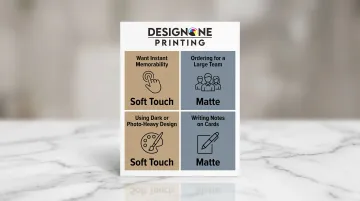
Four Scenarios That Make the Choice Clear
1. "I want people to remember my card immediately." Go with soft touch. The tactile quality creates a physical memory anchor that flat finishes don't. Research on haptic marketing confirms that touch experiences influence decision-making and increase perceived value — people hold onto cards they enjoy touching, and that's the conversion you're after.
2. "I'm ordering for a 20+ person sales team on a budget." Matte. The lower per-unit cost adds up significantly at volume, consistency across large batches is reliable, and the finish still presents professionally. Save the specialty coating budget for client-facing executives who need maximum impression impact.
3. "My design uses a dark background or rich photography." Soft touch. Dark palettes respond beautifully to the muted warmth of the coating, and the velvety texture adds a tactile layer that elevates the perceived quality of the whole card. Pair with spot UV on your logo for the contrast effect.
4. "I write personal notes or appointment times on my cards." Matte. Felt-tip pens, fine-liners, and ballpoints all work cleanly on a matte surface. With soft touch, you're limited to ballpoint — and the risk of smudging in front of a client isn't worth it.
Design Compatibility
Soft touch elevates bold, dark, or minimalist designs and makes painted edges or foil accents stand out more sharply. It can make light or airy designs look slightly flat — so if your palette is pastel or white-heavy, matte is the safer canvas.
Matte works across all design styles without risk of mismatch. If you're genuinely uncertain which finish fits your design, matte is the default choice.
A Note on Cost vs. Value
UPrinting data shows that only 12% of business cards are kept — but that retention rate still exceeds the average online conversion rate of 2.3%. That 12% represents real pipeline: the person who kept your card already remembers the conversation.
Soft touch costs slightly more per unit due to the specialty film. The value question isn't whether the premium is affordable — it's whether the card is memorable enough to be kept. For client-facing professionals in impression-driven industries, it usually is.
When Neither Finish Fits
A few situations where both soft touch and matte fall short:
- Writers who fill cards with notes daily will get better results from uncoated stock, which absorbs ink cleanly without smearing
- Designs built around maximum color vibrancy often perform better with a gloss laminate than either matte or soft touch
- Wood, metal, and plastic cards (Design One Printing's Extreme Cards line) sidestep the finish question entirely — the material itself does the work
Conclusion
Both finishes work. The real question is which one fits your brand — and where you're handing the card out.
Soft touch says: premium, tactile, worth remembering. Matte says: clean, confident, no-nonsense.
For Las Vegas businesses and event attendees heading into convention season, the finish decision connects directly to real outcomes. A card that fits your brand gets kept, referenced, and followed up on. Design One Printing can help you get the right finish — with rush and same-day options for tight event timelines — delivered directly to the Las Vegas Convention Center, The Venetian Expo, Caesars Forum, and other major venues. Reach the team at (702) 530-6277 or at orders@designoneprinting.com.
Frequently Asked Questions
What is the difference between soft touch and matte business cards?
Both are non-glossy finishes, but soft touch has a velvety, suede-like texture you can feel, while matte is flat and smooth with no added tactile quality. The choice comes down to whether you want the card to make a physical impression or a clean, precise visual one.
What is a soft touch finish business card?
Soft touch is a heat-applied BOPP film laminate that creates a velvety, peach-skin-like texture on the card surface. It's sometimes sold as "suede," "velvet laminate," or "silk matte" depending on the printer — always request a physical sample before ordering to confirm the finish matches your expectations.
Can you write on soft touch business cards?
Yes, with limitations. Ballpoint pens and fine-tip permanent markers write cleanly on soft touch. Gel pens and felt-tip pens tend to smudge on the coating. If writing on cards is a regular habit, matte is the more practical choice.
Are soft touch business cards worth it?
For the right use case, yes. Soft touch cards cost slightly more per unit, but the tactile quality makes them harder to discard — a worthwhile trade-off for client-facing professionals in creative, luxury, or hospitality industries.
What is the best finish for a business card?
There's no single best finish. Soft touch is best for premium, creative, and luxury brands; matte is best for corporate, B2B, and high-volume orders. The right choice depends on your brand positioning, design style, and how you actually use your cards in the field.
What is the difference between silk and suede business cards?
"Silk" and "suede" are sometimes used interchangeably, but they're not identical. Suede refers to soft touch — the velvety, tactile laminate — while silk is a smoother, satin-like film that sits between matte and soft touch. Ask your printer for samples to confirm what each term means in their lineup.